

- IAOMT-accredited and SMART-certified holistic dentists.
- Mercury-free, metal-free and BPA-free options.
- Consultations from £150, with a free second consultation.
- Based in Knightsbridge, London.
What is holistic dentistry?
Conventional dentistry may only deal with dental-related issues. However, modern dentistry tends to treat patients by considering their entire body’s health, and even partnering with their other health care providers. Thus, holistic dentistry has gained much attention since it considers your teeth and your health system as a whole person. Holistic dentistry is a form of dentistry which is also commonly known as:
Holistic and Biological Approach
General dentists essentially only diagnose and treat the conditions in the oral cavity, including teeth, gums, jaws, and the jaw joint. Yet, holistic dentistry is practised based on the fact that every part of the body is interconnected; therefore, it addresses overall health for diagnosis and treatment planning.
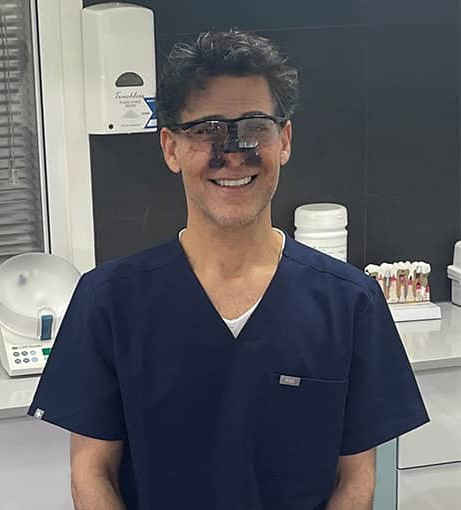
Dr. Nico Kamosi
Dr. Nico Kamosi is one of only five accredited members of the IAOMT (International Academy of Oral Medicine and Toxicology) in the UK, a global leader in science-based, biocompatible and holistic dental care.

Accredited member of IAOMT, SMART Certified
Member of AACD, EFP, AAP, ESCI, IAOT
Working with other health professionals
If you consult a holistic dentist to solve your gum problems, or have a dental implant, you will be treated for your gums but also directed to a nutritionist to analyse and improve your nutritional deficiencies, which might have contributed to the dental condition or compromised immune deficiency.
You will be informed about the relationship between gum disease and diabetes for you to have a better understanding of the importance of maintaining your dental hygiene to avoid non-communicable systemic diseases.
Using natural materials
Holistic dentists use only biocompatible materials such as Zirconia for dental implants, nano-hydroxy-Apatite for remineralisation, Bioactive paste for root canal therapy, L-PRF for bone regeneration, Ozone and laser for disinfection during their dental treatments. In selected cases, such as a history of metal allergies, a holistic dentist will perform a biocompatibility test (MELISA) to ensure the use of Titanium dental implants does not pose any harmful reaction to the substance.
- BPA-free composite fillings instead of amalgam fillings, which contain toxic mercury and other heavy metals
How are holistic and biological dentistry different from conventional dentistry?
Holistic dentists are general dentists who use holistic techniques during diagnosis and treatment planning. However, there are many differences in the therapeutic protocols, biomaterials, and treatment strategies.
| Treatment | Conventional | Our approach |
|---|---|---|
| Fillings | Amalgam has been used to fill cavities. | BPA/TEG/BIG/U-/DMA-free composite fillings; BPA-free bonding agents. |
| Core-Posts | Metal | Fibre-glass |
| Inlays/Onlays | Metal | Ceramic Zirconia |
| Implants | Titanium dental implants. | Zirconia ceramic implants as a metal-free option. |
| Old filling removal | Standard removal | SMART protocol when replacement is clinically indicated. |
| Infected root canals | Direct Revision | Staged biological revision using bioactive paste |
| Periodontal bony defect | Root planing | Followed by Guided Tissue Regeneration, Growth factors |
| Endodontic bone lesion | Do nothing | Retrograde Regeneration |
| Disinfection | Conventional | Followed by Ozone therapy |
What happens at your first holistic dental consultation?
The very first thing we do is meet the patient and understand why they have come to us for holistic dentistry.
1. Understanding the patient’s general health
The first part of the consultation is therefore a detailed conversation about the patient’s general health. We ask about allergies, whether they have allergies to foods, metals or other agents. We ask about existing diseases, particularly autoimmune diseases.
2. Understanding the patient’s dental history
We want to understand all the restorations and dental treatments the patient has had, when they were carried out, how they were carried out, what materials were used, and the sequence of treatment.
3. Reviewing previous X-rays and records
One of the first things we ask is whether the patient can provide previous or historical dental X-rays. If previous good-quality radiographs are available, they can provide valuable diagnostic information without automatically exposing the patient to new radiation.
4. Comprehensive clinical examination
We assess the quality and quantity of restorations and the condition of the teeth. We evaluate the periodontal health and the quality of the gums and other soft tissues. We examine chewing function and the masticatory system, as well as parafunctions such as clenching or grinding.
5. Digital dentistry and radiographic investigation
Depending on the individual patient and the diagnostic question, this may involve 2D or 3D digital radiography, including CBCT where appropriate.
6. Explaining the findings to the patient
We show the patient the images on the screen and explain what we are seeing. We also use a mirror so that the patient can see their own mouth directly.
7. Establishing the treatment priorities
Only after we have gathered all this information do we start discussing treatment.
8. Treatment in stages
We establish the priorities and treat the patient systematically in stages.
For me, the sequence is very important:
First, understand the patient’s oral and general health concerns.
- Systematic diagnostic approach.
- Eliminate pain and discomfort.
- Eliminate infection and disease.
- Non-invasive teeth restoration.
- Establish oral function and chewing comfort.
And only afterwards, if the patient wishes, consider aesthetics by means of orthodontics, tooth whitening or veneers.
SMART Protocol: Protecting Patients, Team & Environment (SMART: Safe Mercury Amalgam Removal)
The Health Risks of Mercury Fillings: Amalgam is a silver-coloured material that was used extensively to fill cavities. Regardless of many pros of amalgam, containing mercury is considered a major drawback. Even though mercury fillings are approved by the Food & Drug Administration (FDA) and backed by the American Dental Association (ADA), holistic dentists refuse to use amalgam, considering it harmful. Mercury is a heavy metal, and there is a rare chance of mercury intoxication if overdosed over time.
In selected cases with specific systemic medical conditions, they recommend replacing existing mercury fillings with BPA-free composite fillings if necessary. Composite fillings come in different shades to match the natural tooth colour, and they are resins that are not harmful to people according to available research.
Our specialists are IAOMT & SMART Certified for Safe Care.
The EU prohibited the use of dental amalgam from 1 January 2025, with exceptions for specific medical needs and a temporary transition for qualifying member states until 30 June 2026.
At COP-6 in November 2025, parties to the Minamata Convention agreed a global phase-out of dental amalgam by 2034.
Read about our amalgam filling removal process for the full details.
Biocompatible, BPA-Free & Metal-Free Restorations
- BPA-Free Composite Bonding (BPA-free dental)
- Ceramic Crowns, Bridges & Maryland Bridges
- Zirconia Ceramic Implants

Digital-Implant-Planning and Guided Implant Surgery
Zirconia, the new generation of implant material, is the best biomaterial option to replace Titanium dental implants. It offers high material hardness, tensile strength, and modulus of elasticity. These white-coloured dental implants offer the ultimate aesthetics and appearance of the surrounding gum tissues. As Zirconia dental implants cause no allergic reactions, they are the most suitable biomaterial in patients with metal allergies. It is the safest biomaterial to preserve the oral bio-environment.
Due to minimal propensity for chemical corrosion and no electrical conductivity, Zirconia implants offer biomaterial durability and longevity. Thermal Non-conductivity: the non-conductivity of heat and cold offers more comfort during intraoral thermal variations. The lower affinity to bacterial plaque and its higher peri-implant vascularisation enhance the soft tissue integrity while reducing the risk of peri-implant inflammatory diseases and biological complications.
The new generation of zirconia biomaterials offers a combination of superior aesthetics and biocompatibility, along with excellent strength. It is a promising alternative to traditional titanium implants.
Dr Nico Kamosi is a certified member of the European Society for Ceramic Implantology (ESCI) and uses the Swiss Nobel Pearl implants.
Read more about ceramic dental implants.
Regenerative Dentistry & Biological Healing
Guided Biofilm Therapy (GBT)
As an initial phase of our systematic non-surgical periodontal treatment, we implement Ultrasonic EMS PIEZON NO PAIN technology followed by AIRFLOW Prophylaxis Master to accomplish the Guided Biofilm Therapy (GBT) protocol, the pioneer concept of modern biofilm management.
Ozone therapy
To deal with dental infection, the antimicrobial effect of Oxygen/ ozone therapy in dentistry is implemented utilising multiple protocols and clinical applications in combating dental disease. Localised and systemic Ozone therapy is a non-invasive disinfecting technique to eliminate harmful bacteria while enhancing tissue healing by stimulating the body’s natural immune defence mechanisms.


Laser-Assisted Periodontal Therapy (LAPT)
We use the antimicrobial effects of Laser-Assisted Periodontal Therapy at 445 µm. This minimally invasive technique helps remove bacteria within the infected tissue while promoting the regeneration of healthy gum tissue. LAPT is particularly effective for treating deeply infected gum pockets as an adjunct to mechanical ultrasonic debridement.

Photo-biomodulation (PBM)
Photobiomodulation therapy is an advanced, non-invasive treatment that uses red light to promote cellular healing and reduce inflammation. For decades, PBM or low-level laser therapy (LLLT) therapy has been effectively used in the treatment of gum disease, joint disorders, and post-surgical healing. PBM improves oral health and enhances well-being by stimulating the body’s natural healing mechanisms.

Extra-oral and Intra-oral application of the PBM
Ozone Therapy & Photobiomodulation
Ozone therapy and PBM can be incorporated into periodontal treatment to support the body’s natural healing processes. Ozone helps disinfect the affected areas, while PBM uses light to stimulate tissue regeneration and reduce inflammation, contributing to faster recovery and improved gum health.
Gum Grafting for Receding Gums
For patients with significant gum recession, gum grafting can restore lost gum tissue and protect the roots of teeth from further damage. By regenerating gum tissue, this treatment helps reduce tooth sensitivity, prevent further gum loss, and improve the smile’s aesthetics. One of the primary treatments we offer for receding gums is gum grafting. This procedure restores lost gum tissue and covers exposed tooth roots, protecting them from further damage, sensitivity, and decay.
Gum grafting not only improves the health and stability of your gums but also enhances the appearance of your smile, making it an ideal solution for both functional and aesthetic concerns.
Platelet-Rich Fibrin (L-PRF) for Faster Healing
L-PRF stands for Leucocyte Platelet Rich Fibrin, extracted from an individual’s own blood in a concentrated form of platelets using a dedicated centrifuge. Regenerative cells and tissue growth factors are concentrated in a blood clot and placed into the tissue defect during the regenerative surgical procedure to gradually enhance tissue healing.
London Specialist Dentists combines L-PRF with different graft replacement materials to restore the hard tissue defects caused by significant bone loss in different regenerative surgical procedures.
Guided Tissue Regeneration for Periodontal Regeneration
Guided Tissue Regeneration (GTR) is a specialised technique in the field of periodontology to stimulate and enhance the regrowth of reduced tooth-supporting periodontal tissues (bone and gum). GTR promotes stimulated tissue healing and regeneration of the tooth-supporting structures via placement of a biocompatible membrane over the bony defect.
Growth factors such as Emdogain® (EMD) could also be used to stimulate the body’s natural regenerative processes, encouraging the regrowth of lost tooth-supporting tissues (cement-attachment-bone).
Education and Maintenance
We promote patient education in our preventive and maintenance oral health care by providing insights on optimising our patients’ diet, oral hygiene, and environmental well-being. We aim to support and empower our patients to actively prevent dental and gum disease daily. At the same time, we provide them with continual individualised supportive maintenance care.
Holistic alternatives to root canal treatment
Holistic dentists may adhere to root canal alternatives and strategies to avoid the need for root canal treatment, including:
Early Intervention with Remineralisation Therapies: Ozone therapy, Topical remineralising agents (calcium phosphate), and proper dietary modifications may help to remineralise enamel and reverse early decay, avoiding pulp involvement altogether.
Conservative Biological Restorative Dentistry: When cavities have progressed but not yet reached the pulp, biological restorative techniques such as Atraumatic Restorative Treatment (ART); Use of biocompatible materials (BPA-free composites, ceramic restorations); Minimally invasive caries removal (Smart Caries Removal techniques). Allowing for maximum preservation of tooth structure, reducing the risk of needing endodontic therapy later.
Pulp Capping and Pulpotomy Techniques: If caries extend close to the pulp chamber but the pulp remains vital, pulp capping or vital pulp therapy can be considered. Materials such as Calcium hydroxide, Mineral Trioxide Aggregate (MTA), or Biodentine can promote pulp healing and reparative dentin formation, helping avoid the need for full root canal treatment.
Learn more about “Controversies in Biological Dentistry: Preserving Teeth vs. Extraction and Dental Implants”.
Holistic Orthodontics & Jaw Health
A holistic orthodontic treatment approach can promote the health of teeth and gums, optimise chewing, and alleviate jaw pain in case of deflective teeth contact interferences. Creating a holistic treatment plan based on appropriate diagnosis is essential to improve both bite and jaw alignment while offering you a pleasing natural smile.
Before embarking on orthodontic treatment, a comprehensive full-mouth assessment should be undertaken to examine your gum health, the integrity and health of your wisdom teeth, the causes of possible existing gum recession, ongoing tooth surface loss, or other dental diseases, e.g., caries.
Non-Extraction Orthodontics should consider preserving intact teeth, growth and integrity of the arches.
Holistic orthodontic treatment should aim to optimise your bite functionality, jaw positioning, and the alignment of the Temporomandibular joints (TMJ) that connect the lower and upper jaws.
Functional Appliances for Airway Health
Chronic snoring could lead to mental health deterioration and exhaustion. As a result, increased risk of stress, depression, daytime sleepiness, lack of concentration and serious relationship problems lead to serious adverse health consequences for sufferers and their bed partners, including increased risk of cardiovascular disease, high blood pressure, strokes, diabetes, etc. Severe snoring could lead to a potentially life-threatening condition called Obstructive Sleep Apnoea (OSA) if left untreated.
Holistic dentists play an important role in practising sleep medicine by assessing and screening patients and managing sleep disorders. Dentists who are specialised or trained in sleep medicine could assess the risks of suffering from OSA to make an initial diagnosis and treat snoring. If you suffer from chronic snoring, please refer to a certified clinician at London Specialist Dentists clinic who makes a difference for our patients, raises awareness, and solves their snoring problems.
TMJ Support & Bite Rehabilitation
Repositioning and Relaxation splints are full-coverage heat-cured hard acrylic occlusal appliances designed to treat conditions such as temporomandibular joint disorders (TMJD), bruxism (teeth grinding) and related issues. These splints benefit individuals suffering from TMJD, bruxism, or related conditions. They aim to alleviate symptoms, protect teeth, and improve jaw function and comfort.
Holistic dentistry consultation fees
Consultations start from £150, with imaging charged separately when needed.
| Consultation or investigation | Fee |
|---|---|
| General consultation | £150 |
| Periodontal specialist consultation | £250 |
| OPG panoramic X-ray, if required | Additional £100 |
| CBCT scan, including report, if required | Additional £150; £200–£250 for complex cases |
| Second consultation, up to one hour | Free |
Treatment prices
Most of our treatment prices are available on our website, and the treatment costs generally start from the prices indicated there.
However, the final cost depends very much on the type of treatment, the complexity of the case and the extent and comprehensiveness of the treatment required.
Therefore, I prefer to assess the patient properly first and then provide a treatment plan and a clear estimate rather than giving a misleading fixed price before I know what the patient actually needs.
View our dental fees.
Our holistic dentists
Dr Nico Kamosi
Dr. Nico Kamosi, is a holistic and biological dentistry leader. With his extensive training and innovative approach, Dr Kamosi offers comprehensive care that prioritises both oral health and overall well-being, all while utilising safe and biocompatible materials.
Renowned for incorporating advanced technologies and techniques, Dr. Nico Kamosi ensures optimal patient outcomes and is dedicated to mercury-free dentistry. As a senior clinical teacher in periodontology at King’s College, Dr. Kamosi also contributes to the education of future dental professionals.
At his practice, Dr Kamosi’s commitment to patient-centred care and holistic principles ensures that every patient receives the highest standard of tailored care.
TDL. DDS. (Swe.), MSc.Perio.(Eng.),
MClinDent.Perio.(Eng.), MSc.Imp.Dent.(Eng.),
Dip.Aesth.Med. (Eng.), MClinDent.Prosth.(Eng.),
Cert., Dip.DHSLM.(RCS.Eng.), Cert.Orth.(Eng.), Cert.Law (Eng.), AIAOMT
Dr. Nico Kamosi is an expert in the fields of biological and holistic dentistry, implementing the latest technologies, including Platelet-rich plasma (L-PRF); Tooth-grafting; LASER and Infrared Bio-modulation; Laser-assisted periodontal treatment; Atraumatic tooth extraction; Periodontal regenerative techniques; Gum transplanting; Bone regeneration; Pulp preservation techniques; Minimally invasive dentistry; Non-toxic biological dentistry; Snoring & sleep Apnoea SMART; Michigan & relaxation Splints and White Ceramic Zirconia implants.
Coming from Sweden and having a Swedish education, I graduated in 1995 from the University of Sweden. That was more than three decades ago (31 years ago), and already at that time we were essentially amalgam-free. We were already metal-free most of the time and were practising what I would describe as a more toxin-free approach to dentistry.
In the year 2000, I became a specialist periodontist. Although I have always been a reasonably experienced and well-educated implantologist, in 2001 I obtained my Master’s degree from University College London in Implantology.
So I would say that the biology of dentistry and holistic dentistry has been with me for the last two decades, but it has become increasingly trained, developed and educated year by year. That also encouraged me to undertake my accreditation with the International Academy of Oral Medicine and Toxicology (IAOMT), a US-based organisation, where I further studied and became certified in this area.
I have been using L-PRF for possibly 12 years. As for ceramic implants, I have been using them for approximately two or three years.
My understanding of biological dentistry has developed throughout my entire career, from my original Swedish education, through periodontology, implantology, prosthodontics and the study of dental materials, and more recently through my additional education in biological dentistry, ozone, L-PRF and ceramic implantology.
How does our approach to holistic dental care differ?
I think one of the important and vital concepts in dentistry should be to look at the patient as a whole and to care for the patient as a whole.
Education before treatment
I want the patient to understand what is happening in their mouth, what the problems are, what the possible options are, and what the advantages and disadvantages of those options may be.
I don’t want a patient simply to come into the surgery and say, “I want this tooth fixed,” and for us to immediately fix that tooth without understanding the wider situation. Sometimes the most important treatment is not the treatment the patient initially asks for.
Giving patients time to understand
Another thing that I believe is important is giving patients enough time. In order for the patient not to be worried about the cost of additional consultation time, we offer a second complimentary consultation session, sometimes up to one hour free of charge.
Looking beyond the immediate problem
Even if, after all the education and discussion, the patient decides to go somewhere else or chooses a more simplistic approach, for example, simply having a couple of restorations rather than addressing their overall oral health, I still feel that, as a specialist dentist, I have taken my mission seriously to have educated the patient and given them the information they need to make their own decision.
Respecting second opinions
Most of the time, patients who come to me may already have seen another dentist, or they may come specifically for a second opinion. When this happens, I give them my views very honestly. But I also tell them that the views of my colleagues are respected.
A patient’s experience of treatment for infected root canals
Dr Nico describes how a patient with jaw pain and infected root canals was assessed, offered options and referred for a second opinion.
Jaw pain and three infected root canals
She had pain in the jaw, headaches and pain around the jaw. She could not open her jaw properly. We took a CBCT scan and realised that she had not one, but three infected root canals.
In this clinic, we always give the patient options. The first option would be to do nothing, although this was not recommended. The second option was to refer her to an endodontic specialist to see whether revision of the root canals was viable, and this was offered to her.
The third option was considered where the teeth had a very poor prognosis. We realised that these teeth not only had infection around the root canals, but also did not have enough remaining tooth substance to build up properly. There were defects, and there was also periodontal disease and periodontal defects.
We therefore also offered the patient biological, atraumatic extraction according to our protocol. We use L-PRF, possibly ridge preservation, and ozonated saline and ozonated gas.
The patient went to see the endodontist for a second opinion, and the endodontist agreed that the prognosis of those teeth was very poor. We also encouraged the patient to maintain a strict healthy diet and healthy lifestyle, and then we arranged the biological extractions. The teeth were removed.
When the patient came back, she said to me:
“I feel like I’m another human being. I am myself now. I sleep so well. My body is myself. I can move my body properly. I don’t feel tired. I’m not anxious. I don’t have anxiety or stress. My lifestyle has changed. My brain is clear. I am a more positive person.”
This is one patient’s experience and results vary.
When is no treatment the right advice?
For me, sometimes the best treatment is to leave something alone, monitor it and review it.
Looking at the restoration itself
I would want to know:
- Are the restorations worn out?
- Do they still adequately support the occlusion and bite?
- Are they strong enough to support the tooth?
- Is the tooth at risk of imminent fracture?
- Has the restoration or tooth already fractured?
- Is the restoration leaking?
- Is it deficient?
- Is it causing food impaction between the teeth?
- Does the patient have proper contact when biting and chewing?
- What materials are being used?
- Are there different metals or non-precious alloys that could be relevant to corrosion or oral galvanism?
We discuss the cost-benefit, risk-benefit, time-benefit and pain-benefit of replacing the restoration.
Sometimes the correct treatment is no treatment
If I consider that the restorations are good enough, that they don’t cause any damage or defect, that they don’t have an adverse impact on the patient’s general health, that they are not a burden to the patient’s health, and that they are functionally absolutely fine, then I would say to the patient:
“Ideally, we should follow this up. We should monitor the restoration.”
We could see the patient again in three months, six months or even a year, depending on the individual situation, to see how those fillings or restorations are doing.
My professional responsibility
Undertaking an irreversible procedure in dentistry simply because a patient wants it is not justified.
Excellence, Reflected in Every Review
Join our patients who recommend us
Visit our Knightsbridge clinic
Our clinic provides holistic dentistry in London from its Knightsbridge location, within reach of Kensington, Chelsea and Central London.
Address: Unit A, 4th Floor, 193-195 Brompton Road, Knightsbridge, London SW3 1NE
Nearest Tube: Knightsbridge (Piccadilly line)
Opening hours: Monday to Friday, 9 am–5.30 pm. Saturday/Sunday: emergencies only.
Phone: 020 7207 5222
FAQs: Common Questions Patients Ask About Holistic & Biological Dentists
Holistic dentistry, often referred to as biological or integrative dentistry, takes into account the patient’s entire well-being, including the health of the teeth and gums. Unlike traditional dentistry, which mainly focuses on oral health, holistic dentistry recognises the connection between oral health and the body’s overall wellness. At London Specialist Dentists, we prioritise non-toxic materials and seek to minimise interventions that might affect the whole system.
We strongly believe in a comprehensive approach that includes attention to nutrition, lifestyle, mental well-being, and the use of biocompatible dental materials to reduce potential toxic reactions.
Yes, the treatments and materials utilised in holistic dentistry are selected with the patient’s complete health in mind. At London Specialist Dentists, we steer clear of materials like mercury amalgam fillings, concentrating instead on materials that are in harmony with the body. We place a strong emphasis on preventive care, nutritional guidance, and the application of minimally invasive techniques.
It’s always recommended to consult with one of our trained and experienced holistic dentists here in London to discuss individual concerns and needs. Our team is committed to recommending treatments that align with your oral health and overall well-being.
The concern over using Bisphenol A in consumer products has grown since the early 1990s.
Bis-GMA and similar dental materials are derivatives of Bisphenol A and may not share the same xeno-estrogenic effects associated with Bisphenol A. However, a growing number of patients have raised health concerns about BPA and its derivatives as dental materials.
The new dental composite materials apply dimethacrylate, free from Bisphenol A, while maximising stress relief during polymerisation.
At London Specialist Dentists, we offer you a full range of advanced, safe, BPA derivative–free products such as adhesives, composite and resin cement dental restorative materials manufactured from novel, stress-realising methacrylate monomers like AFM and AUDMA.
We strive to educate our patients who demand BPA-derivative-free products and procedures.
The actual acquisition of an OPG or CBCT scan is very quick. Depending on the equipment and the examination required, the actual exposure is generally only a matter of seconds, typically around 10 to 15 seconds.
There is normally very little preparation required. We explain the procedure to the patient beforehand and, where appropriate, ask the patient to remove any removable metal objects that could interfere with the image.
As a matter of our own practice policy, we do NOT take dental X-rays or CBCT scans during pregnancy, even if a pregnant patient requests one.
If a pregnant patient has a genuine dental problem that requires urgent investigation, the decision about imaging should be made on an individual clinical basis, taking into account the patient’s circumstances, the urgency of the problem and the principles of justification and radiation protection. Where appropriate, we would liaise with the patient’s dentist or medical team and consider referral for imaging where this is clinically necessary.
Once the CBCT or OPG has been taken, the image is available on our digital system immediately. I can open the scan on my screen and review it with the patient.
I record my findings and prepare a radiographic report. Where appropriate, the report can be provided to the patient, but I believe that the report is only one part of the process.
Yes, absolutely. We are happy to accept referrals from other dental practices where we believe that our specialist services can benefit the patient.
We have no problem working collaboratively with referring dentists and, where requested, we can provide the relevant CBCT and radiographic report to the referring clinician.
The consultation starts at £150, depending on the type and complexity of the consultation.
For example, a general consultation is £150, whereas a periodontal specialist consultation is £250.