

Dental crowns are among the most important and commonly used restorations in modern dentistry. They provide protection, restore function, and enhance aesthetics for compromised teeth. This comprehensive guide explores everything patients and professionals need to know about dental crown treatment, from basic concepts through advanced treatment planning and long-term care.
WHAT IS A DENTAL CROWN?
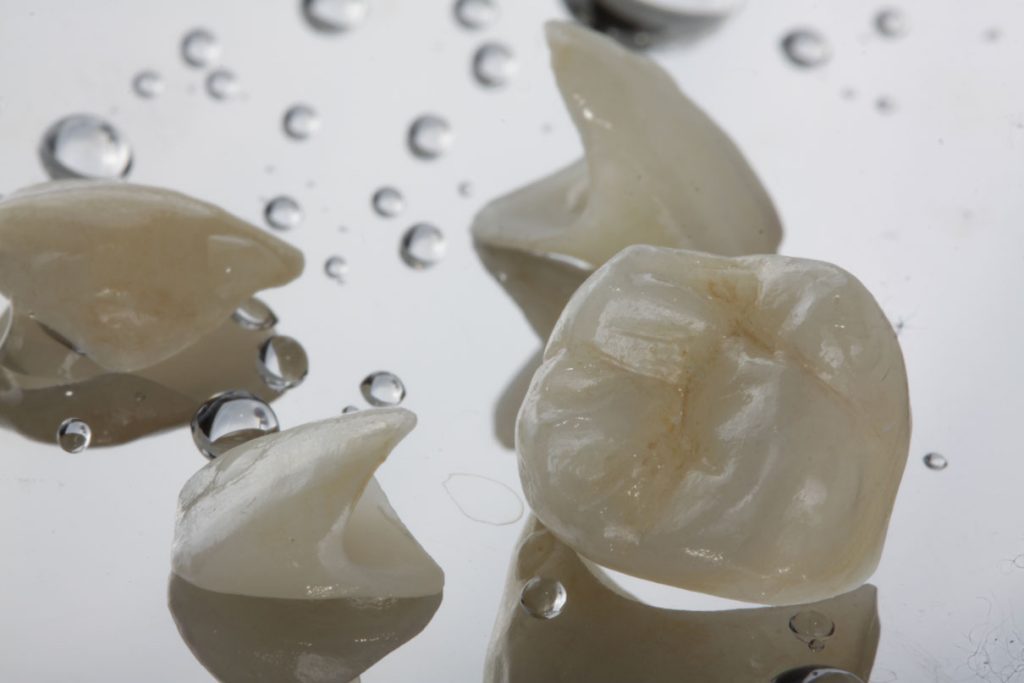
Dental crowns are custom-made, indirect dental restorations that are attached to natural teeth or dental implants using chemical and mechanical retention. They are fabricated manually and digitally in specialized dental laboratories before polishing and final bite adjustment. Ceramic and porcelain crowns are considered the strongest and most natural-looking options available in modern dentistry.
KEY BENEFITS OF DENTAL CROWNS
- Restore compromised tooth structure and function
- Protect teeth following root canal treatment
- Improve aesthetics and smile appearance
- Restore normal bite and chewing function
- Maintain adjacent tooth position and integrity
- Support facial structure and lip support
- Provide long-term durability and stability
CLINICAL INDICATIONS FOR DENTAL CROWNS
- Extensive tooth decay that cannot be repaired with conventional fillings
- Large existing fillings that weaken remaining tooth structure
- Fractured or severely damaged teeth
- Root canal-treated teeth requiring strengthening
- Cosmetic enhancement of discolored or misshaped teeth
- Worn-down teeth from bruxism or other factors
- Teeth requiring alignment or bite correction as part of full mouth rehabilitation
- Replacing defective or damaged existing restorations
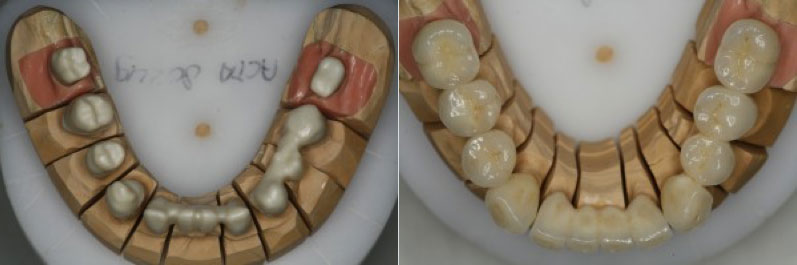
Dental Crowns Case Studies
Our dental crowns before and after photos from our happy patients.


TYPES OF DENTAL CROWNS
Ceramic (Porcelain) Crowns
Ceramic crowns have historically been the material of choice when aesthetics are a priority. They excel at replicating natural tooth appearance through advanced layering techniques. The translucency of porcelain can be carefully modified to match surrounding teeth and create highly natural results.
Key Characteristics:
- Excellent aesthetic results for front teeth
- No metal component – suitable for metal-sensitive patients
- Can be achieved with conservative tooth preparation
- Most commonly used in the anterior region where aesthetics are paramount
Typical UK Cost (2026): £1,050–£1,200
E-Max™ (Lithium Disilicate) Crowns
E.max crowns represent a new generation of ceramic restorations that have largely replaced traditional porcelain. They offer a combination of high durability, strength, and excellent aesthetics that make them suitable for both anterior and posterior applications.
Key Characteristics:
- Improved mechanical strength and flexibility with significantly higher flexural strength
- Excellent aesthetic results suitable for anterior and selected posterior teeth
- Compatible with increased biting forces
- Requires more conservative tooth preparation, preserving more natural tooth structure
- Increasingly the most commonly used restoration in modern dental clinics
Typical UK Cost (2026): From £1,050
Zirconia Crowns
Zirconia has revolutionized restorative dentistry by offering one of the most resistant, durable, and reliable options for crowns. Modern zirconia crowns now feature improved aesthetic qualities that rival ceramic crowns in appearance, even in anterior regions.
Key Characteristics:
- Extremely high fracture resistance and structural strength
- Compatible with heavy biting forces
- Improved translucency and aesthetics through advanced layering techniques
- Ideal for both natural teeth and dental implants
- Provides exceptional long-term restorative solution
Typical UK Cost (2026): £1,200–£1,500 (Premium ceramic zirconia implant crowns from £1,500)
CROWN TREATMENT PROCEDURES
Initial Consultation and Treatment Planning
Primary impressions are made and study models are cast to design and plan the crown. Jaw relationships are recorded to establish a harmonic restorative contact relationship that supports proper occlusion and long-term success.
Tooth Preparation (First Appointment)
Under local anaesthesia, tooth preparation is performed for pain-free reduction of the tooth. After preparation, a temporary crown is fabricated from tooth-colored acrylic material to protect the prepared tooth. Compatible shading is selected and the impression is sent to the laboratory for crown fabrication.
Laboratory Fabrication
At London Specialist Dentists, we collaborate with Europe’s top ceramic artists and expert master technicians from well-established dental laboratories specializing in cosmetic dentistry and smile design. The dental laboratory fabricates the permanent crown using premium materials and advanced techniques.
Final Cementation (Second Appointment)
The permanent crown is tried in to assess satisfactory seating, shape, form, and shade. Once full satisfaction is obtained, the bite is adjusted for proper occlusion, and the restoration is cemented permanently.
CROWN SAFETY AND BIOCOMPATIBILITY
Are Dental Crowns Safe?
Yes. Modern dental crowns made from zirconium oxide and silicate ceramics (such as IPS e.max) are highly biocompatible, non-toxic, and inert. They are safe for long-term use and do not release harmful substances into the body. At London Specialist Dentists, we exclusively use certified, high-quality materials to ensure patient safety and biological compatibility.
Materials Used in Crown Fabrication
- High-strength ceramics (zirconium oxide, silicate ceramics)
- Metal alloys (gold, nickel, cobalt, palladium)
- Porcelain-fused-to-metal (PFM) systems
Ceramic crowns are particularly favored for their natural appearance and excellent tissue compatibility.
HOW LONG DO DENTAL CROWNS LAST?
Crown lifespan depends on multiple factors:
- Ceramic and E.max crowns: Approximately 10 to 15 years or longer
- Zirconia crowns: Between 15 and 30 years
Longevity is influenced by:
- Quality of fabrication and crown design
- Functional load forces and patient bite patterns
- Oral hygiene maintenance
- Regular dental check-ups
- Habitual grinding or chewing patterns
CROWN CARE AND MAINTENANCE
Good oral hygiene and proper maintenance are essential for crown longevity:
- Regular brushing and flossing
- Routine dental check-ups and professional cleanings
- Avoid biting hard objects or using teeth as tools
- Maintain a healthy diet low in acidic foods and beverages
- Wear a nightguard if experiencing bruxism (teeth grinding)
- Immediate attention to any discomfort or crown looseness
FREQUENTLY ASKED QUESTIONS
Short-term mild discomfort may occur after placement, typically resolving within days. Post-treatment tooth sensitivity to temperature is common for 3-4 days. Persistent pain warrants a dental consultation.
Yes. Ceramic crowns are biologically safer: they do not corrode, do not release metal ions, and provide superior aesthetics and biocompatibility compared to metal-based crowns.
Contact your dentist for bite adjustment. Deflective tooth contacts can lead to fracture of teeth and fillings. Our specialists can modify the biting surfaces appropriately.
No. Ceramic, porcelain, and zirconia materials do not respond to whitening agents. We recommend whitening natural teeth before permanent crown placement to ensure harmonious shade matching.
Under stressful life events, some individuals may experience headaches and migraines from dysfunctional jaw movements. We may prescribe an occlusal splint or nightguard to reduce stress on teeth, muscles, and joints.
SPECIALIST-LED CROWN TREATMENT
Crown treatment at London Specialist Dentists is provided under the clinical leadership of Dr. Nico Kamosi, a specialist clinician with extensive training in periodontology, implantology, and prosthodontics. His multidisciplinary background supports a restorative approach that prioritizes:
- Conservative and atraumatic tooth preparation
- Evidence-based material selection and biomechanics
- Careful assessment of functional bite and occlusion
- Long-term biological and functional outcomes
- Full-mouth rehabilitation planning
At London Specialist Dentists, we deliver holistic, conservative, and reconstructive dentistry based on each patient’s individual needs. Our specialist-led approach ensures the highest quality crowns with long-term clinical success.