
Last Updated on April 11, 2026 by Dr. Nico Kamosi
Why Dental Implant Material Matters in Terms of Long and Short-Term Predictability, Durability, and Biological Sequences
Understanding the Biological Choice
For the last three to five decades, titanium has been considered the golden standard of alloy material within implant dentistry. However, recent body of evidence indicates that zirconia implants could be an alternative material to replace titanium implants gradually, as they are aligned more appropriately to the biological landmarks of the body and the biological and holistic dentistry.
Dental implants can replace your missing teeth. There are two main types of implants in modern dentistry:
- Titanium Dental Implants
- Ceramic/Zirconia Implants
Although more than 95% of dental implants are made of titanium you can have a ceramic implant if recommended by your dentist.
At London Specialist Dentists, we would like to assume that we would like to encompass the standard towards the best material in order to provide our patients with the highest range of material within the course of implant dentistry. This is in line with the fact that most of our patients these days are referring to us in order to see the cons and pros, the long and short-term prognosis, and the difference between the metal-free and titanium dental implants.
What Are Metal-Free Dental Implants?
Traditional alloy-based, metal-based dental implants have been proved to be adequately integrated to the bone tissue bed, a phenomenon called osseointegration or bone integration. At the same time, zirconium dioxide, which is a crystalline material, is a metal-free and able to do this, perform the same biological process. Both materials provide adequate support for the crowns and bridges as well as dentures.
The difference is not if they are just being adequately supporting those superstructures or crown and bridges. The difference is in the fact that how biologically they would integrate within the body.
The Key Difference: Biocompatibility Profile
Titanium Implants
They are electroconductive. They conduct the electricity and electrical currents
They can also corrode, create microcorrosion on the surface of the dental implant surfaces or interface when subject to the tissue fluid body, and release ions and even metal particles in the long term
This creates corrosion, interface, biological reactivity, and even immunological response
As a result, triggering localized inflammation and then low-grade inflammation or silent inflammation and affect and afflict individuals with increased or excessive, exaggerated immunological response to the biomaterials
They are, however, widely used and they have extensive evidence of body of evidence and profile in order to support the reliability
Zirconia Ceramic Implants
They are electro-nonconductive and they are electronically inert, which means they don’t conduct electricity
They are chemically stable, resistant to corrosion compared to the titanium implant
Hence they are hypoallergenic. They don’t trigger any kind of metal sensitivity caused by free ions and leakage of the metal particles
While the profile of their evidence is growing for the last 10, 20 years, they seem to be the future choice of the implants
Why Dental Implant Material Matters
The Biological Dentistry Philosophy
The biological holistic dentistry applies and refers to the principle of both oral and general health as a whole body concept of health. We treat a patient not in an isolated part of the body of the mouth, but then we consider the general health is affected by the following:
- Material compatibility
- Inflammatory response
- Systemic load
- Long-term safety
This philosophy would question what material best serve to be biologically compatible and in the long term, bioinert, respecting the body’s biological activity and biological health.
Material Compatibility
Which material would have adverse biological impact on the immune system and nervous system? Which of those materials would create or trigger a chronic local inflammation? Which of those implant materials would be safe in the long term, the next two, three, four decades, when surrounded by the body tissues, soft tissue and hard tissue? This question needs to be answered right from the outset before making a decision of what implant material should be inserted.
Key Advantages of Ceramic Implants
1. Metal-Free
Ceramic implants are much superior to titanium implants mainly because they are metal-free whereas most titanium dental implants have metal alloys. Due to the presence of metal alloys in titanium implants, they may corrode over time in your mouth which could be leading to metal toxicity and medical conditions such as hypersensitivity allergic reactions and many other autoimmune disorders.
2. Corrosion Resistant
Unlike titanium implants, ceramic implants are corrosion-resistant and hypo-allergenic. This is why ceramic implants are known to be holistic and highly bio-compatible dentistry whereas titanium implants are only bio-tolerable by some patients.
3. Zero Taste Disturbances
The metallic composition of the titanium implants can rarely cause a metal taste in patients while ceramic implants don’t cause any taste disturbance as they are metal free.
4. Easy Plaque Control
We can expect less plaque accumulation with ceramic implants as they are not as rough as titanium implants. They have a low affinity for attracting and retaining plaque and less bacterial adhesion than titanium. The incidence of periodontal diseases with ceramic implants is low with good oral hygiene maintenance. So, ceramic implants are more soft tissue-friendly.
5. High Esthetics
Titanium implants are dark grey and ceramic implants are white. So, titanium implants could show a visible metal appearance around the gum line. Ceramic implants look like natural teeth. Therefore, as far as esthetics is concerned especially in patients with thin or delicate soft tissues, ceramic implants would be the best option as they provide a highly appealing appearance. Unlike titanium implants, they cause less mucosal discolouration.
6. Zero Galvanic Shock
Titanium implants are mostly made of two pieces; the implant body and the implant abutment which are held together by a screw. These parts are mostly made of different titanium alloys that could cause galvanic shock or battery effect to your body and brain, especially during chewing and swallowing your saliva. Ceramic implants are mostly one piece but recently a few companies are making them in two pieces. Regardless of whether one or two-piece zirconia are metal-free and they do not cause a galvanic shock at all.
7. High Strength
As evidence shows, both titanium and ceramic implants are equally strong enough to bear occlusal loads.
However, some people believe that ceramic implants break faster than titanium implants. The hardness and tensile strength of the new generation of ceramic implants has been shown to equally or higher than titanium implants. Although fracture is a minor issue with any type of dental implants, the reality is that any broken implant could be replaced but metal toxicity from titanium implants in the jawbone is seems to be more of an irreversible phenomenon.

Why Patients Increasingly Tend to Choose Zirconia Implant Material: Where Is the Evidence?
1. Metal Reactivity
All the titanium body is biocompatible, but this is a misconception. As over time, the electrical currents caused by the presence of microenvironment, saliva, and its varying pH, creating galvanic microcurrents, and oral microbiota, titanium may release metal ions, depends on purity and the alloy properties. Scan electron microscope have detected titanium particles in the lymph nodes, where they are taken care of as a foreign body to clear up the tissue, in other organs, and even surrounding bone around the implants.
For most of the patients with healthy immune system and intact immune system, this is not noticeable in the beginning. However, individuals with developed immunological response against the microcorrosion, leaked, released metal ions and elements develop the immune response or even autoimmune disease. The accumulation of these foreign bodies and ions released from the implant surface due to the impurity or corrosion product eliminates a potential source of the immunological stimulation.
2. Electrical and Electromagnetic Properties
We have different metal in the oral environment, such as amalgam, such as mercury fillings, metal bonded crowns, metal crowns, gold crowns, stainless steel, and non-precious alloy crown material which releases cobalt, chromium, cadmium, nickel, copper, and other non-precious metals. These all together with different electronegativity, they create an electrical environment. While being saliva as a conductive environment, those different metals create microgalvanic currents. While titanium implants is participating as a part of this electrical circuit, which in the long term interfering with nerves signalling, especially in people possibly with EMF sensitivity. As a result of interference with nerve signalling within the cellular communication, the transfer of subtle oral systemic health adversities increases.
The zirconia dioxide material, on the other hand, is electrically inert or electron non-conductive. For those patients concerned about electromagnetic or electroconductivity sensitivity, zirconia implant, on the other hand, is the electroinert material of choice to minimize the stress in the oral cavity, both in terms of chemical but also electromagnetic burden.
3. Aesthetic Outcomes
Zirconia or zirconium dioxide is a white-to-cream color material compared to the titanium, which presents with a metallic grayish appearance. As a result of gum recession during the course of the long-life presence of titanium implants, the unsightly dark grayish metal-based titanium implant can present with disturbing surface characteristic and marginal darkness as a result of gingival gum recession compared to that of zirconium implant exposure.
4. Soft Tissue Response
The clinical study and microscopic studies indicate that the appearance of the plaque and bacteria on the surface of the zirconia implants is far less compared to that of titanium. The plaque retention and biofilm conformation around the dental implants varies between the zirconia and titanium implant materials, making zirconia material a material of choice also in terms of the biocompatibility and in general oral health in the short and long term.
Lower plaque accumulation and reduced risk for peri-implant disease, peri-implant mucositis, peri-implant gum inflammation or peri-implantitis, which is a disease around the implant, is naturally reduced around the zirconia implants.
5. Long-Term Stability
The latest evidence-based study and meta-analysis around the year 2024 proved that zirconia implant can have a success rate of about 95 to 98% in a 10 years long studies with equal or less bone margin bone loss compared to titanium and a good survival rate of 96 to 99%. This well-evidenced clinical studies indicate the performance of zirconia implant compared to titanium, while the convincing evidence indicates the biological adverse impact of the titanium implant material.
According to the clinical data of 15 to 20 years, these implants have a success rate of 91 to 95 percentage survival rate. Due to the fact that zirconia implants do not corrode or degrade, they are superior to titanium implants in that regard. The future zirconia implants, for sure in the next 30-40 years, are going to be more stable in patients than titanium implants due to the macrocorrosion and possible perimplant disease or perimplant inflammation associated with titanium, although we don’t yet have data for the next 30-40 years.

Who Should Consider Zirconia Implants?
Zirconia implants are particularly well-suited for patients who:
- Have metal sensitivities or allergies
- Follow a holistic or biological approach to health
- Are concerned about long-term bioaccumulation of metals
- Have autoimmune or chronic inflammatory conditions
- Value electromagnetic or electroconductivity neutrality
- Have high aesthetic expectations, especially in visible areas
- Seek implants that will remain stable and bioinert over decades
Is Zirconia Right for You?
Like any other implant material, zirconia implant is an excellent option of the material for you if you have hypersensitivity to metal or you are hyperallergenic to metal corrosion products.
If you are following the holistic and biological approach to oral health and body health correlation concept, if you are concerned about the adverse impact of the biocorrosion of the bone-titanium implant interface and the spread leakage of ions to your health system, either through blood circulation or lymphatic circulation to other parts of your body.
If you have autoimmune disease or have an unexplained chronic inflammatory response elsewhere in your body, if you have experienced electromagnetic field (EMF) or metal microgalvanic oral experience, if you are searching for an ideal biocompatible inert material which you expect to have a stable biochemical and biological outcome within the next 30 years, three decades.
Common Questions About Zirconia Implants
Are Zirconia Implants as Strong as Titanium Ones?
Yes. Zirconia material has a very high compressive and flexural strength, an excellent replacement for titanium implants. It withstands high chewing forces and in all flexural compression, stress, and strain situations, acts equally and performs equally to the titanium implant.
Although slightly more brittle than titanium, it can fracture under extreme stress forces or poorly designed restorative design, where titanium implant has greater capacity to bend. However, for normal function, this is not relevant.
How Long Are Zirconia Implants Viable?
According to the clinical data of 15 to 20 years, these implants have a success rate of 91 to 95 percentage survival rate.
Due to the fact that zirconia implants do not corrode or degrade, they are superior to titanium implants in that regard. The future zirconia implants, for sure in the next 30-40 years, are going to be more stable in patients than titanium implants due to the macrocorrosion and possible perimplant disease or perimplant inflammation associated with titanium, although we don’t yet have data for the next 30-40 years.
Will My Insurance Cover Zirconia Implants?
Most insurance covers a percentage of the expenses involved in both titanium and zirconia implants.
However, the expenses and costs involved in the placement and restoration of zirconia implants are slightly higher than titanium implants due to the extra cost of the material, laboratory costs, and time involved. Zirconia implants are a premium alternative.
In some cases, you might have to pay a slightly higher percentage of the whole cost as part of your insurance plan. This can be discussed with your clinician to understand your individual coverage and financial options.
Our Approach to Implant Material Selection at London Specialist Dentists
A. Specialist Expertise
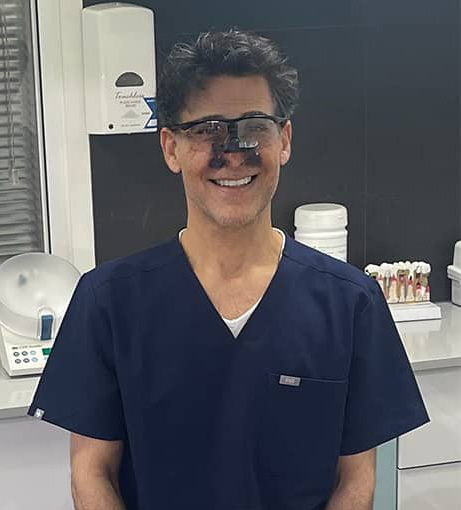
Dr. Nico Kamosi is a registered specialist periodontist, implantologist, and prosthodontist with extensive both academic and clinical training and experience in the biomechanical and biological aspects of dental implantology, implementing advanced implant techniques.
Unlike a general dentist who is learning aspects of titanium or zirconia implant placement, you will be treated by a specialist who has been teaching, giving lectures, and trained in different countries, bringing you the state-of-the-art science of dental implantology in both surgical and prosthodontic aspects, performing advanced implantology based on biological principles.
B. Comprehensive Assessment
Our practice offers a comprehensive oral assessment and biomechanical assessment. We evaluate your:
- General health
- Oral health using special tests
- Body-to-metal sensitivity
- Immune status
- Aesthetic goals
We shall recommend the best methods suited for you, not what is convenient or standard, but what is biologically optimal for your individual health profile.
C. Precision Planning
We use 3D imaging systems and 3D designing systems in order to achieve the state-of-the-art surgical precision in positioning and location of the dental implants with maximum accuracy required for the most optimized approach to restorative rehabilitation of your missing tooth.
D. Holistic Integration
We will take into account:
- Your overall health
- The presence of any immunological disorder in your body
- Your blood pressure
- Your heart health
- Your general well-being
We ensure the best material and the best surgical technique is applied to meet your biological requirement in the short and long term, with the most predictable outcome.
E. Transparent Communication
Following a full mouth comprehensive oral investigation, we shall discuss every aspect of your treatment:
- Time required for complete treatment
- Cost and financial options
- Risk-benefit analysis
- Cost-benefit analysis
- Short-term and long-term outcomes
- Your role as the main stay of the collaborative team to achieve that goal
You are never a passive patient here. You are an active partner in your own care.
F. Long-Term Follow-Up
We not only encourage you, but we require your close collaboration and cooperation to attend all your post-operative appointments free of charge until your implant is restored.
We shall monitor the integration of your implant, your soft tissue healing, and we undertake any procedure required for achieving the best biological and functional outcome to secure a long-term biomechanical outcome with the best aesthetic result.
Your Decision: What Matters Most
Choosing between titanium and zirconia is not a simple one-size-fits-all decision. It depends on:
- Your health status and immune function
- Your values regarding biological compatibility
- Your aesthetic expectations
- Your long-term health goals
- Your individual risk factors
At London Specialist Dentists, we believe you deserve all the information, honest discussion, and personalized guidance to make the choice that is right for your body, your health, and your future.
The Next Step: Schedule Your Consultation
If you believe zirconia implants may be right for you, or facing any dental implant complication or dental implant failure, or if you simply want to explore your options with a specialist who understands biological dentistry, we invite you to schedule a consultation.
During your consultation with Dr. Nico Kamosi, you will:
- Undergo a comprehensive health and dental assessment
- Discuss your concerns about implant materials in detail
- Review 3D imaging of your specific situation
- Understand your individual options for material selection
- Receive transparent information about costs, timing, and outcomes
- Have all your questions answered without bias or pressure
Final Note
This article has provided you with comprehensive information on what implant materials are, how they differ, why the choice matters, and how we help you make the best decision for your individual needs.
The decision about your implant material is yours to make. We are here to provide the evidence, expertise, and support you need to make that decision with confidence and clarity.
This article is for educational purposes and does not replace professional dental consultation. Every patient’s situation is unique. Please schedule a consultation with Dr. Kamosi to discuss your individual needs, health status, and treatment options.
Dr. Nico Kamosi
Dr. Nico Kamosi
Specialist Periodontist, Implantologist, Prosthodontist, Holistic and Biological Dentist
TDL. DDS. (Swe.), MSc.Perio.(Eng.),
MClinDent.Perio.(Eng.), MSc.Imp.Dent.(Eng.),
Dip.Aesth.Med. (Eng.), MClinDent.Prosth.(Eng.),
Cert., Dip.DHSLM.(RCS.Eng.), Cert.Orth.(Eng.), Cert.Law (Eng.), AIAOMT
Accredited member of IAOMT, SMART Certified
Member of AACD, EFP, AAP, ESCI, IAOMT
