

Dental bridges are more extensive restorations that bridge the gap left by missing teeth. As their name implies, bridges literally bridge the space left by missing teeth, providing a permanent solution for tooth loss. This comprehensive guide explores the art and science behind dental bridges, their indications, materials, procedures, and benefits at London Specialist Dentists.
WHAT IS A DENTAL BRIDGE?
A dental bridge is a custom-made indirect dental restoration designed to replace one or more missing teeth. Bridges are attached to natural teeth or dental implants using chemical and mechanical retention. These restorations are fabricated in dental laboratories using advanced digital and manual techniques. A dental bridge includes a few fused crowns and replaces missing teeth by connecting two or more teeth together.
The Structure of a Dental Bridge
A bridge consists of:
- Abutment teeth: Natural teeth or implants on either side of the missing tooth space that support the bridge
- Pontics: The artificial replacement teeth that fill the gap of the missing teeth
- Retainers: The crowns that are attached to the abutment teeth or implants
CLINICAL INDICATIONS FOR DENTAL BRIDGES
Dental bridges are recommended when:
- You have one or multiple missing adjacent teeth
You need a more permanent solution rather than dentures - Adjacent teeth are suitable to serve as abutments
- You want to restore chewing function and eating comfort
- You need to improve appearance and smile aesthetics
BENEFITS OF DENTAL BRIDGES
Dental bridges offer multiple functional and aesthetic advantages:
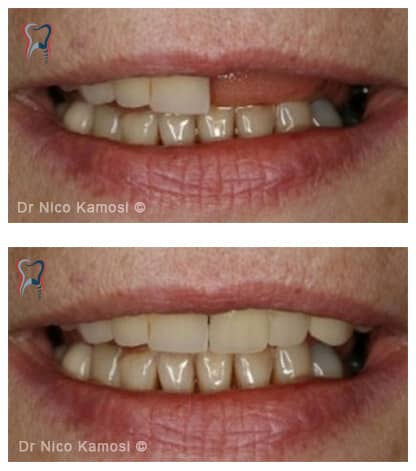
- Replace missing teeth and restore the natural appearance of your smile
- Rehabilitate compromised bite and restore chewing function and comfort
- Maintain the position and integrity of adjacent teeth, preventing them from rotating and shifting
- Support lip structure and maintain facial aesthetics
- Fixate mobile teeth as a function of cross-arch stabilisation
- Improve speech and communication
- Provide permanent solution more stable than removable dentures
TYPES OF DENTAL BRIDGES
Traditional Fixed Bridge
A traditional fixed bridge is the most common type. The abutment teeth (teeth adjacent to the missing tooth space) are prepared and crowned, with the artificial tooth (pontic) fused between these crowns.
Cantilever Bridge
A cantilever bridge is used when there is only one abutment tooth available to support the pontic. This design is less common due to increased stress on the abutment tooth.
Maryland Bridge (Resin-Bonded Bridge)
A Maryland bridge is a more conservative option that uses a metal or ceramic framework bonded to the back of adjacent teeth. This requires minimal tooth preparation, preserving more natural tooth structure. Maryland bridges are ideal for patients seeking a minimally invasive approach to tooth replacement.
MATERIALS USED TO FABRICATE BRIDGES
Recent advances in ceramic and zirconia materials have greatly improved the quality and clinical performance of dental bridges, making them suitable for use in both anterior and posterior regions with high success rates. The following are the most commonly used materials:
Ceramic (Porcelain) Bridges
Whole ceramic bridges look almost natural. They are more suitable for your front teeth because they match the shape, size, and colour of your surrounding teeth very well.
Key Advantages:
- Superior aesthetic results with natural appearance
- No metal component – suitable for metal-sensitive patients
- Excellent tissue compatibility
- Biocompatible and non-toxic
Zirconia Bridges
Zirconia’s properties make it an excellent bridge material because it balances hardness and elasticity. Zirconia bridges look great and are less likely to fracture than porcelain bridges. They offer exceptional strength and aesthetic qualities suitable for demanding clinical situations.
E-Max (Lithium Disilicate) Bridges
E.max bridges represent a new generation of ceramic restorations that combine high durability, strength, and excellent aesthetics. They successfully combine strength and aesthetics in a wide range of clinical situations and are among the most commonly used restorations in modern dental clinics.
BRIDGE TREATMENT PROCEDURES
Initial Consultation and Treatment Planning
Primary impressions are made and study models are cast to design and plan the bridge. Jaw relationships are recorded to establish a harmonic restorative contact relationship.
Abutment Tooth Preparation (First Appointment)
Under local anaesthesia, tooth preparation is performed for pain-free reduction of the abutment teeth. A temporary bridge is fabricated from tooth-colored acrylic material. Compatible shading is selected and the impression is sent to the laboratory.
Laboratory Fabrication
The dental laboratory fabricates the permanent bridge using premium materials and advanced techniques. The provisional bridge protects the prepared teeth while providing support during function. Typical fabrication time is 2-3 weeks.
Final Cementation (Second Appointment)
The permanent bridge is tried in to assess satisfactory seating, shape, form, and shade. Once full satisfaction is obtained, the bite is adjusted and the restoration is cemented permanently.
THE ART AND SCIENCE OF BRIDGE DESIGN
Dentistry isn’t just a medical field; it’s an art form. The precision, attention to detail, and understanding of aesthetics set a regular dental solution apart from an exceptional one. Dental bridges play an important role in cosmetic and restorative dentistry, requiring both artistry and science.
Why Details Matter
Every patient is unique, and so is their smile. Crafting dental solutions that resonate with individual needs requires a deep understanding of both dental science and aesthetics:
- Symmetry: Ensuring the dental work aligns seamlessly with the patient’s face
- Shade Matching: Selecting the perfect shade that matches the surrounding teeth
- Functional Integration: Beyond looks, the dental work must function harmoniously
BRIDGE SAFETY AND BIOCOMPATIBILITY
Modern ceramic bridges are highly biocompatible, non-toxic, and safe for long-term use. At London Specialist Dentists, we exclusively use certified, high-quality materials to ensure patient safety and biological compatibility.
Metal-Free Bridge Options
For patients with known or suspected metal allergies, all-ceramic bridges (zirconia or IPS e.max ceramics) are the safest option. These materials are:
- Metal-free
Chemically stable - Highly compatible with soft tissues and bone
- Non-corrosive
- Do not release harmful ions
HOW LONG DO DENTAL BRIDGES LAST?
Bridge lifespan depends on multiple factors:
- Ceramic and E.max bridges: Approximately 10 to 15 years or longer
- Zirconia bridges: Between 15 and 30 years
Longevity is influenced by:
- Quality of fabrication and bridge design
- Functional load forces and bite patterns
- Oral hygiene maintenance
- Regular dental check-ups
- Health and integrity of abutment teeth
- Habitual grinding or chewing patterns
BRIDGE CARE AND MAINTENANCE
Good oral hygiene and proper maintenance are essential for bridge longevity:
- Regular brushing and flossing (use special floss threaders to clean under the bridge)
- Routine dental check-ups and professional cleanings
- Avoid biting hard objects or using teeth as tools
- Maintain a healthy diet
- Wear a nightguard if experiencing bruxism (teeth grinding)
- Immediate attention to any discomfort or bridge looseness
FREQUENTLY ASKED QUESTIONS
Yes. A bridge can replace one or more missing adjacent teeth. For longer spans or multiple missing teeth with gaps, dental implants may be a better option.
Using efficient local anaesthesia ensures comfort throughout the procedure. Most patients report no discomfort, even during tooth preparation. Any post-treatment sensitivity is typically mild and transient.
No. Ceramic, porcelain, and zirconia materials do not respond to whitening agents. We recommend whitening natural teeth before permanent bridge placement to ensure harmonious shade matching.
Bridges offer several advantages: they are more economical, require no surgical procedure, have a shorter treatment time, and are ideal when adjacent teeth require restoration or when multiple adjacent teeth are missing.
SPECIALIST-LED BRIDGE TREATMENT
Bridge treatment at London Specialist Dentists is provided under the clinical leadership of Dr. Nico Kamosi, a specialist clinician with extensive training in periodontology, implantology, and prosthodontics. Our specialists understand the importance of conservative tooth preparation, evidence-based material selection, functional bite assessment, and long-term biological outcomes.
Dental bridges provide a proven, effective solution for replacing missing teeth. When properly designed and fabricated by experienced specialists, bridges restore function, aesthetics, and quality of life. At London Specialist Dentists, our commitment to the artistry and precision behind bridge design ensures that your restoration will blend seamlessly with your natural smile while providing years of reliable service.