
Last Updated on July 5, 2026 by Dr. Nico Kamosi
Part 1: Understanding EDS, Mast Cell Activation Syndrome, and What It Means for Your Gums
Your oral health does not exist in isolation. For patients living with Ehlers-Danlos Syndrome (EDS) or Mast Cell Activation Syndrome (MCAS), the link between systemic health and the health of your gums, teeth, and jawbone is profound and very often missed.
At London Specialist Dentists, we come across patients with EDS and MCAS. This article explains what these conditions are, how they affect your mouth, and how our specialist approach can help you achieve long-term stability, comfort, and wellbeing.
What is Ehlers-Danlos Syndrome (EDS)?
EDS is a group of inherited conditions affecting connective tissue the body’s structural framework. Connective tissue is built largely from proteins called collagen, particularly collagen types 1 and 3. These proteins give strength and resilience to your skin, joints, blood vessels, gums, and jawbone.
In EDS, collagen is produced abnormally or in reduced amounts. The result is tissue that is weaker, more fragile, and less able to repair itself after damage or inflammation.
How EDS presents – and why it varies so much
No two people with EDS are exactly alike. Some experience only mild signs; others face significant daily challenges. Common features include:
- Joints that bend further than normal, or frequently dislocate or click
- Skin that is soft, velvety, or stretches easily and bruises or tears with minor trauma
- Slow or poor wound healing after cuts, dental procedures, or surgery
- Chronic pain in muscles or joints, often from a young age
- Extreme fatigue not explained by other causes
EDS is not simply a joint or skin condition. Because collagen supports every organ and system, EDS affects the whole body including your immune system, circulation, digestion, and of course your mouth.
What is Mast Cell Activation Syndrome (MCAS)?
MCAS stands for Mast Cell Activation Syndrome. Mast cells are immune cells found throughout the body including in your gum tissue and jawbone. Their normal role is to help defend against infection and injury.
In MCAS, mast cells become overactive and hypersensitive. Instead of responding only to genuine threats, they release large amounts of inflammatory chemicals such as histamine and cytokines spontaneously or in response to mild triggers like foods, stress, temperature, or dental materials.
This leads to widespread, unpredictable inflammation throughout the body, causing:
- Flushing, itching, hives, or swelling
- Digestive problems, bloating, or nausea
- Brain fog, headaches, and fatigue
- Sensitivity to medications, certain foods, or dental materials
- Burning sensations including in the gums
EDS + MCAS: A ‘Double Challenge’
These two conditions very frequently occur together. EDS creates structurally weak tissue. MCAS adds uncontrolled inflammation on top of that weakness. Together, they create a cycle that can cause severe, rapid damage to the gums and supporting bone — often even when oral hygiene is excellent.
This is one of the most important patterns I identify in my practice.
How EDS and MCAS Affect Your Gums and Oral Health
As a specialist in periodontal (gum) disease, I see how differently gum disease develops and progresses in patients with EDS and MCAS. The tissues that hold your teeth in place the gums, the periodontal ligament, and the jawbone depend entirely on healthy collagen. When collagen is defective, everything changes.
What happens in the mouth
- Gum tissue becomes thinner, more fragile, and bleeds very easily — even with gentle brushing
- Gums recede (pull back), exposing the roots of teeth
- Bone loss around teeth is often severe and rapid far beyond what would be expected for age or oral hygiene
- Teeth may feel loose or gradually shift position
- Healing after any dental procedure is slow, incomplete, or problematic
- Infections recur easily and are difficult to clear with standard treatment
Crucially: in EDS and MCAS, these problems can develop even when you clean your teeth carefully and regularly. The underlying condition is the primary risk factor not your home care.
Our Approach: Safe, Gentle, Regenerative Care
Standard dental protocols are often not appropriate for patients with EDS and MCAS. At London Specialist Dentists, our approach is built around three principles: reducing inflammation, avoiding foreign body or hypersensitivity reactions, and using safe, regenerative techniques to support healing.
Minimising toxicity and hypersensitivity risk
For patients with MCAS in particular, exposure to dental materials, chemicals, or medications can trigger significant reactions. We take great care to:
- Review your full medical and allergy history before any treatment
- Avoid materials or substances that may provoke mast cell reactions
- Select biocompatible, low-irritant materials wherever possible
- Discuss any planned materials with your medical team before proceeding
Ozone Therapy
Ozone therapy uses medical-grade ozone gas or ozonated water to eliminate bacteria, viruses, and fungi without the toxicity of conventional chemical antimicrobials. For EDS and MCAS patients, ozone offers a gentle, effective way to reduce infection and inflammation without triggering hypersensitivity reactions.
Photo-biomodulation (PBM / Low-Level Laser Therapy)
PBM uses safe, low-level light energy to reduce pain, calm inflammation, increase blood flow, and stimulate your body’s own tissue repair mechanisms. It directly supports the production of healthy collagen types 1 and 3 precisely what EDS patients need. We use PBM routinely to support healing before, during, and after treatment.
SMART Protocol (Safe Mercury Amalgam Removal Technique)
Where removal of old amalgam fillings is indicated, we follow the SMART protocol the internationally recognised safe removal standard. This minimises mercury vapour exposure during removal, which is especially important for patients with EDS and MCAS who may be more sensitive to chemical exposure and immune triggers.
Laser-Assisted Periodontal Treatment (LAPT)
Instead of conventional surgical instruments, we use dental lasers to precisely remove infected and inflamed tissue, eliminate bacteria, and stimulate healing all without stretching or traumatising fragile gums. Lasers are ideal for EDS patients because they:
- Remove only diseased tissue while leaving healthy tissue untouched
- Seal blood vessels as they work, reducing bleeding and bruising
- Actively stimulate collagen production and accelerate healing
- Reduce post-operative pain and swelling significantly
Regenerative Techniques
Where bone or gum tissue has been lost, we use advanced regenerative procedures including carefully selected biocompatible bone graft materials, barrier membranes, and growth factors to rebuild the structural support around your teeth. All materials are selected to minimise the risk of foreign body or allergic reactions.
Our Care Principles for EDS & MCAS Patients
- We take a full medical history before treatment every time
- We select only biocompatible, low-sensitising materials
- We use ozone therapy, PBM, and laser techniques to minimise trauma and inflammation
- We coordinate with your medical team (immunologist, geneticist, rheumatologist)
- We see you more frequently typically every 8–12 weeks to monitor and protect stability
- We never rush. Gentle, unhurried care produces better outcomes for fragile tissues.
Summary: Key Points to Remember
- EDS affects collagen types 1 and 3 the proteins that keep your gums, bone, and connective tissue strong
- MCAS causes mast cells to release inflammatory chemicals that damage tissues and trigger reactions to ordinary substances
- Together, EDS and MCAS can cause severe, rapid gum and bone loss even with excellent home care
- Standard dental treatments may not be safe or effective for you; specialist care is essential
- Our approach uses ozone, PBM, laser therapy, and carefully selected biocompatible materials
- We avoid foreign body reactions and hypersensitivity triggers at every stage of your care
- Long-term, personalised maintenance is the key to stability and health
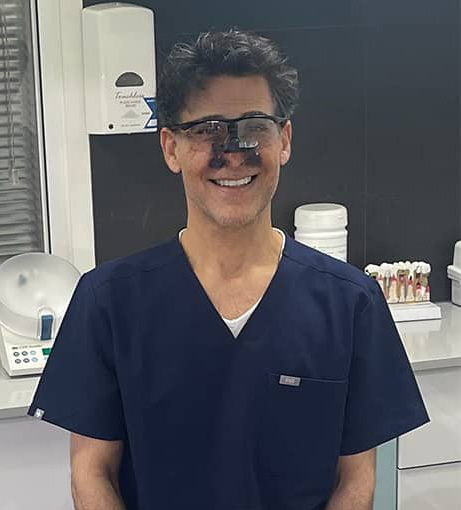
Dr. Nico Kamosi
Dr. Nico Kamosi
Specialist Periodontist, Implantologist, Prosthodontist, Holistic and Biological Dentist
TDL. DDS. (Swe.), MSc.Perio.(Eng.),
MClinDent.Perio.(Eng.), MSc.Imp.Dent.(Eng.),
Dip.Aesth.Med. (Eng.), MClinDent.Prosth.(Eng.),
Cert., Dip.DHSLM.(RCS.Eng.), Cert.Orth.(Eng.), Cert.Law (Eng.), AIAOMT
Accredited member of IAOMT, SMART Certified
Member of AACD, EFP, AAP, ESCI, IAOMT
