

Last Updated on July 5, 2026 by Dr. Nico Kamosi
In a world saturated with Wi-Fi signals, smartphones, and screens, it’s no surprise that more people are asking whether all this invisible technology might be affecting how they feel. Some patients describe headaches, fatigue, and a persistent ache in the neck and shoulders that seems to worsen the more time they spend near electronic devices. This cluster of experiences is sometimes labelled Electromagnetic Hypersensitivity, or EHS, and it often travels alongside another very real and very common complaint: musculoskeletal pain.
What People Mean by EHS
EHS describes a pattern in which someone attributes a range of physical symptoms to exposure to electromagnetic fields, the kind emitted by phones, routers, laptops, and power lines. The symptoms reported are wide-ranging: headaches, brain fog, dizziness, disrupted sleep, tingling skin, irritability, and muscle or joint pain. It’s worth being honest about where the science currently stands. Despite years of research, no study has reliably shown that EMF exposure itself causes these symptoms under controlled conditions. That doesn’t mean the symptoms aren’t real or distressing, only that the underlying mechanism remains genuinely unclear, and research continues into psychological, neurological, and environmental explanations.
Musculoskeletal pain is a far more familiar territory: discomfort in the muscles, joints, tendons, and connective tissue that make up our everyday movement. Neck stiffness, shoulder tension, lower back pain, and jaw discomfort are some of its most common faces. The causes are equally familiar to most of us: hours hunched over a laptop, stress that settles into the shoulders, poor sleep, old injuries, or habits like clenching the jaw without even realising it.
What’s interesting is how often these two pictures overlap. People who identify with EHS frequently describe the same chronic neck and shoulder tension, generalised aches, and jaw tightness that show up in classic musculoskeletal pain. Whether this is because EMF exposure is genuinely contributing, or because the underlying drivers, things like screen posture, stress, disrupted sleep, and nervous system dysregulation, are simply shared between the two, is still an open question. In practice, the two often can’t be neatly separated.
Why a Single Explanation Rarely Tells the Whole Story
It’s tempting to look for one tidy cause, especially when symptoms are uncomfortable and persistent. But chronic pain and EHS-like symptoms tend to be the result of several factors layering on top of each other rather than any single trigger acting alone. Poor sleep weakens the body’s ability to recover from daily strain. Chronic stress keeps muscles, particularly around the jaw, neck, and shoulders, in a near-constant state of low-grade tension. Nutritional gaps, especially in vitamin D, magnesium, and B vitamins, can make muscles more prone to aching and cramping. And for many people, none of this gets resolved until someone looks at the full picture rather than treating each symptom in isolation.
The Jaw’s Often-Overlooked Role
One area that’s frequently missed in this picture is the jaw itself. Temporomandibular joint (TMJ) dysfunction and bruxism, the habit of clenching or grinding teeth, are powerful and underappreciated contributors to headaches, neck pain, and shoulder tension. The muscles involved in jaw movement are closely connected, both physically and neurologically, to the muscles of the neck and upper back. Chronic jaw tension doesn’t stay confined to the jaw; it radiates outward, often showing up as the very symptoms people associate with stress, screen time, or even EHS.
This is part of why a holistic, whole-body approach to dental and facial health matters. Looking at oral health alongside posture, sleep quality, stress levels, and nutritional status often uncovers connections that a narrower, single-symptom approach would miss. For some patients, addressing bruxism, jaw alignment, or chronic tension patterns brings relief not just in the mouth and jaw, but in the neck, shoulders, and head as well.
Moving Forward Without a Single Label
If you’ve been struggling with a combination of fatigue, tension, and pain, and you’re not sure whether to call it EHS, stress, TMJ dysfunction, or simply “modern life,” you’re not alone, and you don’t need a single diagnosis to start feeling better. A thoughtful, comprehensive evaluation, one that looks at sleep, posture, jaw function, nutrition, and stress together, is usually far more useful than chasing one possible cause in isolation.
If jaw tension, clenching, or facial pain feels like part of your picture, that’s a conversation worth having with a dentist who looks beyond the teeth themselves and considers how oral health connects to the rest of the body.
How Dr Nico Kamosi Approaches This at London Specialist Dentists
Dr Nico Kamosi brings a particular lens to cases like these, grounded in his training in biological dentistry and dental toxicology. This means he looks closely at the materials used in and around the mouth, including metal fillings, dental alloys, and the possibility of leaking or failing restorations, and considers whether a patient might be experiencing a hypersensitivity or chemical reaction to the compounds within them. His assessment also extends to areas that are easy to overlook, such as old root canal-treated teeth and cavitations, sites within the jawbone that can sometimes harbour low-grade inflammation long after a procedure appears, on the surface, to have healed.
It’s important to be clear about what this assessment is, and what it isn’t. Dr Kamosi does not claim to treat EHS, fibromyalgia, or systemic immune conditions, and no responsible dentist should suggest otherwise. What he does offer is a thorough oral evaluation aimed at identifying and ruling out any dental factors, whether material-related, infective, or structural, that could be contributing to or aggravating a wider systemic or immune burden. For some patients, removing a source of chronic low-grade inflammation or sensitivity in the mouth brings noticeable relief elsewhere in the body. For others, it simply provides reassurance that their oral health isn’t a hidden piece of the puzzle.
If any of this sounds familiar, we’d encourage you to come in for a conversation with Dr Kamosi. Sometimes the clearest path forward starts with making sure nothing in the mouth has been quietly overlooked.
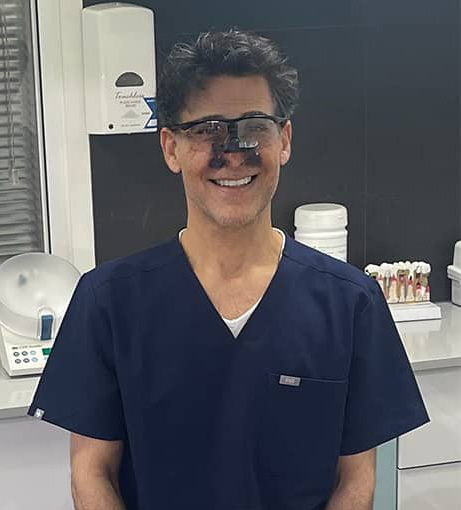
Dr. Nico Kamosi

Dr. Nico Kamosi
Specialist Periodontist, Implantologist, Prosthodontist, Holistic and Biological Dentist
TDL. DDS. (Swe.), MSc.Perio.(Eng.),
MClinDent.Perio.(Eng.), MSc.Imp.Dent.(Eng.),
Dip.Aesth.Med. (Eng.), MClinDent.Prosth.(Eng.),
Cert., Dip.DHSLM.(RCS.Eng.), Cert.Orth.(Eng.), Cert.Law (Eng.), AIAOMT
Accredited member of IAOMT, SMART Certified
Member of AACD, EFP, AAP, ESCI, IAOMT
